
blog
Lighting
By Hackit Design Team
Daylight, glare control and supportive home lighting principles that reduce headaches, improve mood and support safety.
Lighting affects mood, sleep and concentration. Poor lighting can also increase:
- Headaches
- Eyestrain
- Accidents
The HSE guidance on lighting at work is useful for explaining the practical impacts of inadequate lighting, even in home settings.
Key principles of supportive home lighting
Supportive lighting helps when it reduces strain on the eyes and nervous system, improves safety and makes everyday tasks easier. It does not help when it creates glare, harsh contrast, confusing shadows or lighting that feels out of your control.
Layer your lighting
Layering, ambient, task and accent, reduces harsh shadows and makes the space easier to read. It supports wayfinding, lowers trip risk and reduces the need to over light the whole room just to see one task.
This does not help if the layers are not easy to control. Multiple lamps on different plugs with unclear switches can increase frustration and cognitive load. Poor placement can also create glare or shadowing, like a bright light behind you when you are cooking.
Use warm, dimmable light in the evening
Warm, dimmable lighting supports wind down routines and can reduce overstimulation in the evening. This is especially helpful for people who are sensitive to bright light, experience migraines, struggle with sleep or feel wired at night.
This does not help if it becomes too dim for safe movement. Warm light can also reduce colour contrast, so balance warmth with enough brightness for hallways, stairs and bathrooms.
Reduce glare with shades and diffusers
Glare is a common trigger for headaches, eye fatigue and sensory overload. Shades and diffusers soften light, reduce harsh reflections on screens and shiny surfaces and make the environment feel calmer.
This does not help if over diffusing makes the room feel gloomy or if the diffuser creates visible patterns that irritate visual stress. Choose plain, matte finishes where possible.
Improve task lighting in kitchens and bathrooms
Kitchens and bathrooms are high risk areas where you need clear visibility for safety, hygiene and precision. Good task lighting reduces accidents, supports independence and lowers fatigue because you are not squinting or leaning forward to see.
This does not help if task lighting creates sharp contrast, for example a very bright strip light in an otherwise dark room, which can be disorienting. Position lights to reduce shadows on worktops and around mirrors.
Consider motion lighting for night time safety
Motion lighting supports safe navigation when you are half asleep, in pain or managing dizziness. It reduces the need to search for switches and lowers trip risk.
This does not help if it is too bright, triggers too easily or feels intrusive. Low level, warm motion lights with a short timer work best, placed to guide the route rather than flood the whole room.
What transformation looks like
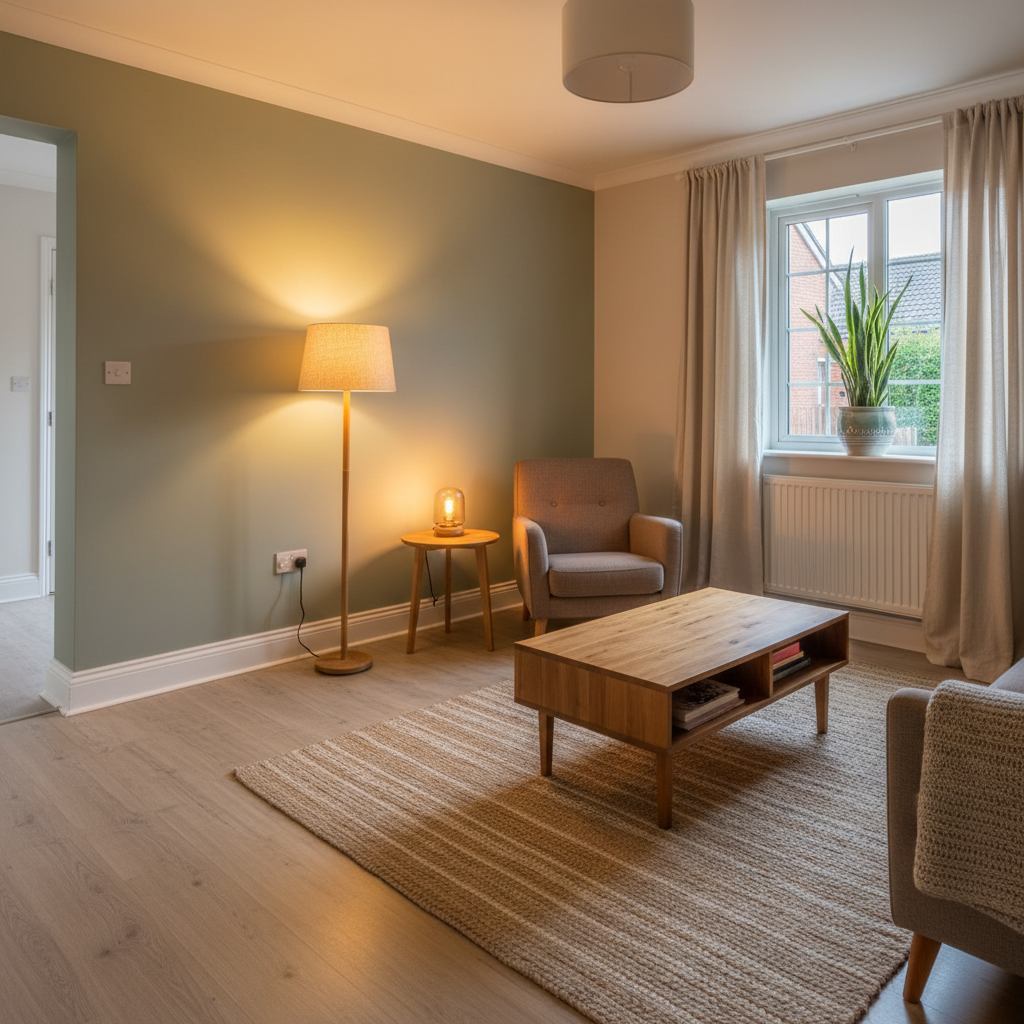
Lighting is one of the fastest and most affordable ways to change how a room feels. The same space can go from harsh and draining to warm and restorative with a few thoughtful changes.
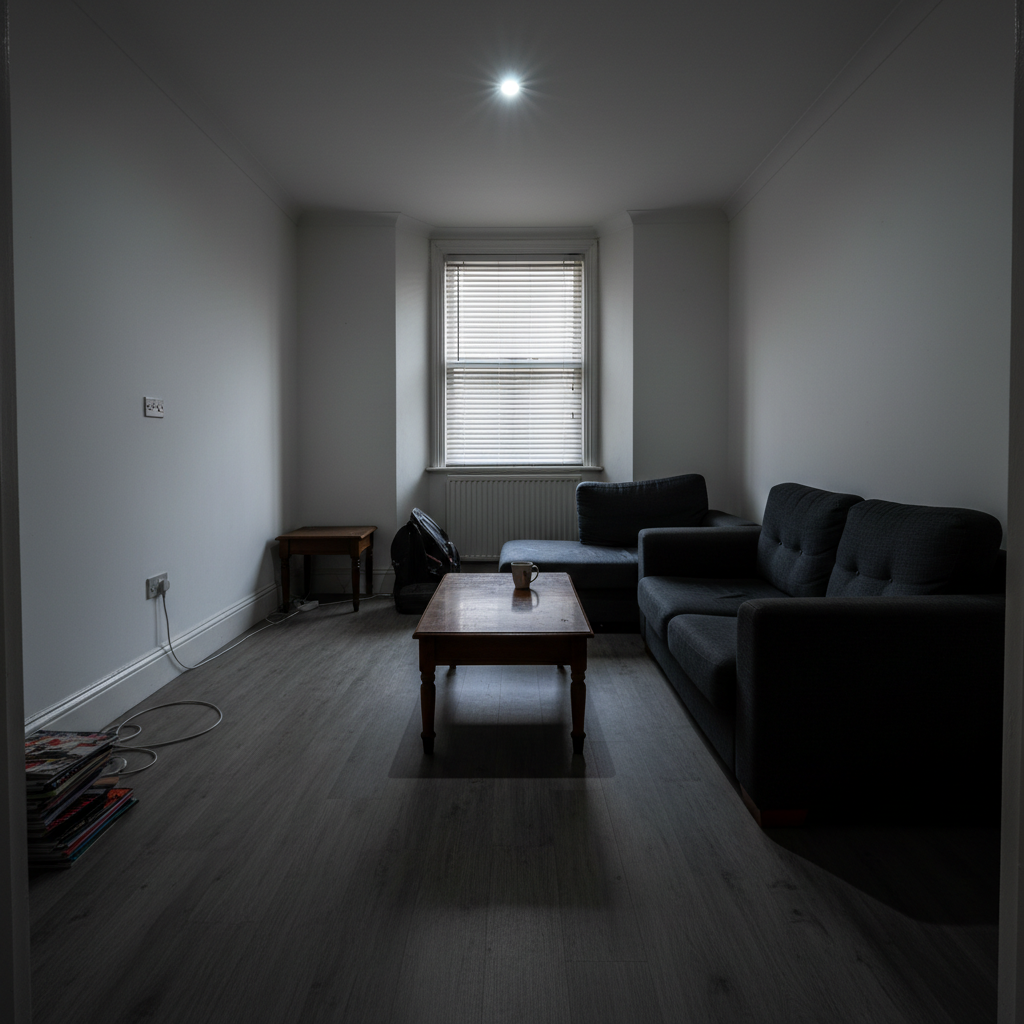
The change here was replacing a single harsh ceiling light with warm dimmable cove lighting, adding a floor lamp and table lamp for layered light, painting the walls a calming sage colour and adding soft textures to absorb both light and sound. The room structure stayed the same. The experience of being in it changed completely.
If you want support to make your home feel calmer, safer and easier to live in, you can book a Hackit Design home assessment. If you are an organisation, you can request a consultation for inclusive, emotionally safe and neuroinclusive design guidance.
Evidence and links
- HSE Lighting at work HSG38 Supports the case that poor lighting contributes to eyestrain, headaches and visual discomfort.
- NHS dementia home environment guidance Supports practical lighting recommendations for safety and orientation.
Need personalised support
Book a home assessment and we will recommend the right next steps for your home.
Need personalised support
Enjoyed this article?
Follow Hackit Design for more evidence-based guidance on NeuroInclusive Interior Design, accessible homes and wellbeing.
Share this article on Facebook · on LinkedIn