
blog
Public spaces still exclude people weekly
By Hackit Design Team
With 17.8 percent of people in England and Wales disabled, public environments need to work for everyone. Here is what inclusive spaces must get right.
In 2021, 17.8% of people in England and Wales were disabled. That is nearly one in five of the population. Yet for many, leaving the house means navigating entrances that are not accessible, toilets that cannot be used and environments that are sensorily overwhelming.
Public spaces still exclude disabled people regularly. This is not about individual buildings failing here and there. It is a design problem across the whole built environment.
What exclusion looks like in practice
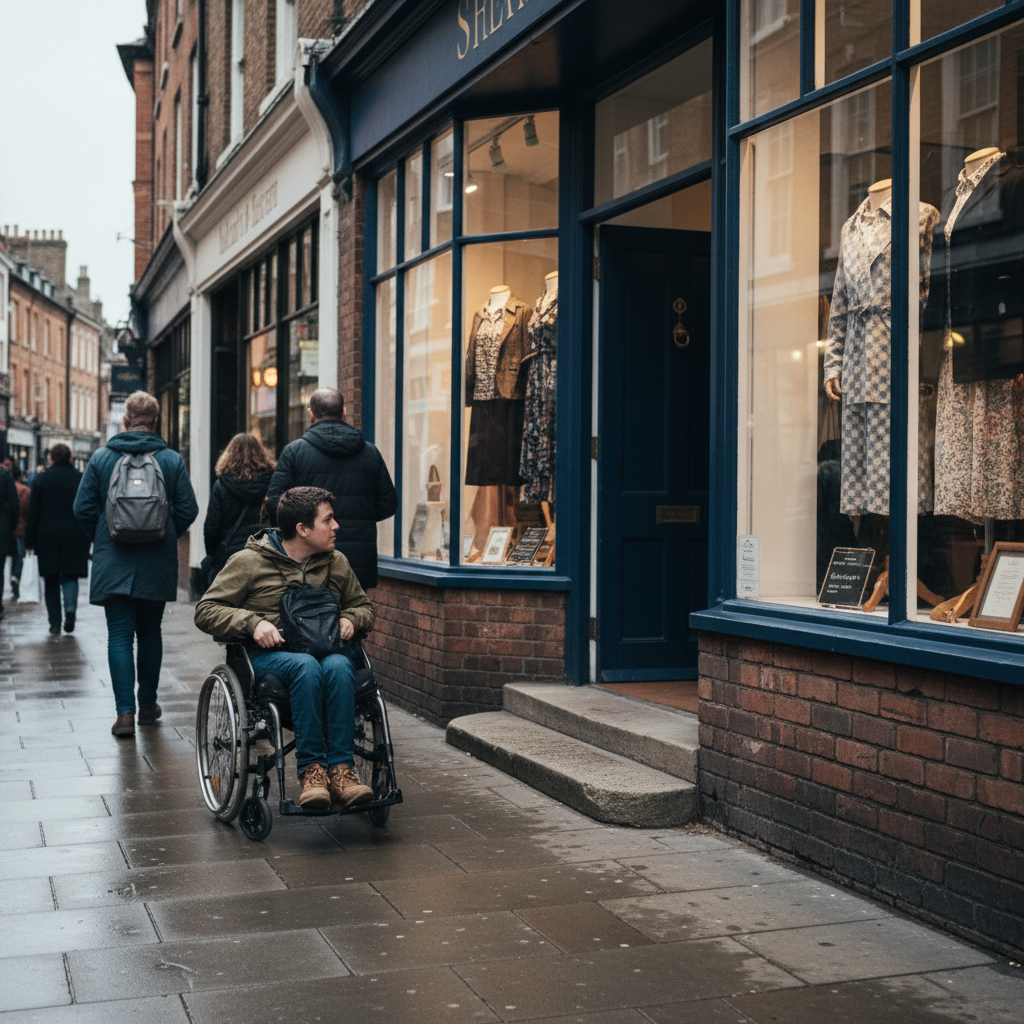
A step at the entrance with no ramp or level alternative
A toilet that a wheelchair user cannot enter or turn in
Lighting that is harsh, flickering or unpredictable for people with sensory sensitivities
Acoustics that make conversation impossible for people with hearing loss or auditory processing differences
Wayfinding that relies on visual cues alone with no tactile or audio alternatives
These are not rare. They are common experiences reported by disabled people every week.
What inclusive public environments need to do
Entrances
Every entrance should offer a level or ramped option with clear signage and adequate lighting. Automatic doors reduce physical effort and remove a common barrier.
Toilets
Accessible toilets need enough space for a wheelchair and a companion if needed. Changing Places toilets with hoists and adult sized changing benches should be available in larger public venues.
Acoustics
Background noise, echo and poor sound separation make spaces exhausting for many disabled and neurodivergent people. Acoustic treatments, quiet zones and hearing loop systems should be common, not exceptional.
Wayfinding
Clear, consistent signage in large print with tactile and audio alternatives helps people navigate independently. Relying on visual cues alone excludes people with sight loss, cognitive processing differences and learning disabilities.
Evidence and links
ONS Census 2021 disability bulletin Supports the 17.8% disability prevalence figure for England and Wales.
Scope disability facts and figures Supports the 16 million disabled people statistic and the case for inclusive public environments.
UK Parliament disability statistics briefing paper Supports broader disability data and the policy context for inclusive design standards.
Your next step
If your home is not yet a safe and accessible base, our free assessment helps you identify what needs to change first.
Need personalised support
Book a home assessment and we will recommend the right next steps for your home.
Need personalised support
Enjoyed this article?
Follow Hackit Design for more evidence-based guidance on NeuroInclusive Interior Design, accessible homes and wellbeing.
Share this article on Facebook · on LinkedIn